My First Emotional Intelligence Workbook: A Guide for Parents and Educators
Emotional intelligence is a vital skill that lays the foundation for personal growth, social success, and lifelong well-being. My First Emotional Intelligence Workbook offers an accessible, engaging way to introduce young children to the world of emotions in a structured yet playful manner. Designed for kids ages 4–8, this workbook blends creativity with education, making it an essential tool for parents, teachers, and caregivers looking to support emotional development from an early age.
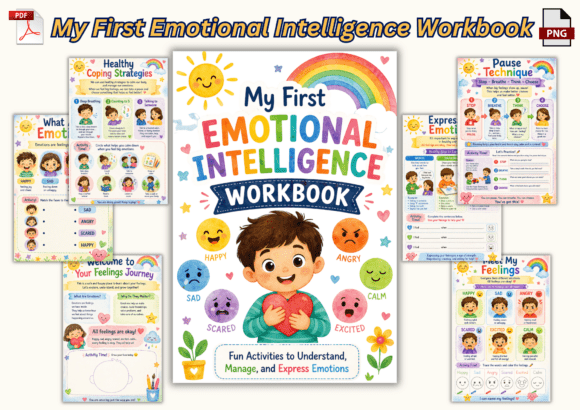
The workbook features 31 pages filled with interactive activities, watercolor-style illustrations, and kid-friendly layouts that make learning about emotions both fun and effective. It covers key topics such as identifying emotions, managing feelings, building empathy, and developing self-awareness. Whether used at home, in the classroom, or during one-on-one sessions, this resource provides a comprehensive approach to nurturing emotional skills in young learners.
Why Choose My First Emotional Intelligence Workbook?
Many parents and educators may overlook the importance of teaching emotional intelligence until it becomes a pressing issue. However, early exposure to emotional awareness can significantly impact a child’s ability to navigate relationships, handle stress, and build confidence. My First Emotional Intelligence Workbook addresses this need by offering a structured program tailored specifically for young children.
One common mistake is assuming that children will naturally develop emotional intelligence without guidance. In reality, just like math or reading, emotional skills require practice, modeling, and reinforcement. Using this workbook helps bridge that gap by providing clear, actionable exercises that encourage reflection and expression.
Another misconception is that emotional intelligence is only relevant for children with behavioral challenges. In truth, all children benefit from understanding their emotions. This workbook introduces concepts like happiness, sadness, anger, fear, excitement, and calmness in a way that is easy for young minds to grasp.
What You Should Know Before Getting Started
Before using My First Emotional Intelligence Workbook, it's important to understand how to maximize its effectiveness. One common oversight is not taking the time to go through the workbook with your child regularly. Emotional intelligence is not a one-time lesson—it requires consistent engagement and discussion.
Some users may also skip the reflection pages, thinking they are optional. However, these sections are crucial for helping children process their experiences and track their progress over time. They provide a space for journaling, drawing, and writing, which can be powerful tools for self-expression.
Additionally, it's easy to underestimate the value of the watercolor-style illustrations. These visuals are not just decorative—they serve as visual cues that help children recognize and label their emotions more easily. Parents and educators should take advantage of these images by discussing them openly with children.
Common Mistakes and How to Avoid Them
One of the most frequent mistakes when using this workbook is treating it as a standalone resource without incorporating it into daily routines. Emotional intelligence is best developed through regular, meaningful interactions. Instead of completing a few pages once in a while, integrate the activities into everyday conversations and situations.
Another mistake is not adapting the workbook to fit the child’s individual needs. While the content is designed for general use, each child has unique emotional experiences and challenges. For example, a child who struggles with anxiety may benefit more from the calming techniques section, while another child may need more help with expressing anger constructively.
Parents and educators should also avoid rushing through the material. It's tempting to focus on finishing the workbook quickly, but emotional learning is a gradual process. Take time to explore each activity, ask questions, and allow the child to lead the conversation.
Maximizing the Benefits of the Workbook
To get the most out of My First Emotional Intelligence Workbook, consider combining it with other strategies that reinforce emotional learning. For instance, model emotional regulation yourself by talking about your own feelings in a healthy way. Children learn by observing adults, so being open and honest about emotions can have a powerful impact.
You can also create a “feelings chart” at home or in the classroom to help children identify and express their emotions more easily. This can be a simple visual aid that complements the workbook’s activities and encourages ongoing dialogue about feelings.
Finally, don’t forget to celebrate progress. Emotional intelligence is a journey, and every small step counts. Praise your child for their efforts, whether it’s recognizing a new emotion or trying a new coping strategy. Positive reinforcement helps build confidence and motivation.
Final Thoughts
My First Emotional Intelligence Workbook is more than just a collection of activities—it’s a valuable tool for fostering emotional growth in young children. By avoiding common mistakes and using the workbook thoughtfully, parents and educators can help children develop the skills they need to thrive emotionally, socially, and academically.
Whether you're a parent, teacher, or caregiver, investing in emotional intelligence early can yield long-term benefits. With its engaging design, practical lessons, and emphasis on self-awareness, this workbook is an excellent choice for anyone committed to supporting the emotional development of young learners.