The Family Roots Research Planner: A Practical Tool for Organized Genealogy Work
Genealogy research can be a deeply rewarding journey, offering insight into personal heritage and family history. However, without proper organization, this process can quickly become overwhelming. The Family Roots Research Planner is designed to streamline this experience, providing a structured yet flexible system for documenting ancestry, preserving memories, and building a comprehensive family tree. This planner goes beyond traditional notebooks by integrating practical tools that help users stay focused, track progress, and maintain consistency in their research.
What Makes the Family Roots Research Planner Unique?
The Family Roots Research Planner stands out due to its thoughtful design and emphasis on usability. Unlike generic genealogy software or basic notebooks, it offers a tailored approach to researching family history. It combines elements of project management with creative documentation, making it suitable for both casual explorers and serious researchers.
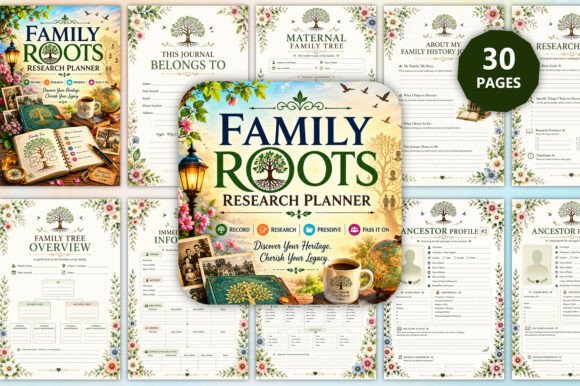
One of its most notable features is the Family Tree Building System. This section provides structured layouts for recording relationships, allowing users to map out generations with clarity. Whether you're starting from scratch or expanding an existing tree, the planner’s organized format ensures that no detail is overlooked.
Key Components That Enhance Usability
The planner includes several components that contribute to its effectiveness:
- Personal Family Records: Pages are dedicated to recording immediate family details such as names, birth dates, occupations, and other relevant information. These sections are ideal for creating a centralized repository of essential data.
- Ancestor Research Profiles: Users can document ancestors’ life stories, achievements, and personal history in dedicated sections. This feature encourages deeper exploration and helps preserve narratives that might otherwise be lost over time.
- Research Goals Planning: Setting clear goals is crucial for any long-term project. The planner includes tools for defining objectives and tracking progress, ensuring that users remain motivated and focused throughout their research journey.
- Birth, Marriage, and Death Records: Structured logs allow users to record important life events across generations. This makes it easier to cross-reference records and verify accuracy.
- Census Historical Records Tracker: For those interested in historical documentation, the planner includes tools for tracking census data and sources. This helps ensure that research is thorough and grounded in reliable information.
- Family History Story Pages: Guided sections encourage users to write about their families, capturing memories and experiences that add emotional depth to the research process.
This combination of practicality and creativity makes the Family Roots Research Planner a versatile tool for anyone looking to explore their ancestry in a meaningful way.
Who Can Benefit from Using This Planner?
The Family Roots Research Planner is particularly well-suited for individuals who want to take a more intentional approach to genealogy. This includes professionals, entrepreneurs, educators, and hobbyists who value organization and structure in their work.
For example, educators may find the planner useful for incorporating family history into classroom projects or personal development programs. Entrepreneurs and creators could use it to develop content around family heritage, whether for blogs, podcasts, or social media platforms. Small business owners might also benefit from using the planner to document family legacies that are central to their brand identity.
Additionally, the planner is ideal for those who prefer hands-on, tactile methods of organizing information rather than digital tools alone. Its physical format allows for easy annotation, sketching, and note-taking, which can enhance the overall experience of discovery.
Evaluating Quality and Long-Term Value
When assessing the quality of the Family Roots Research Planner, several factors stand out. First, the presentation is clean and professional, with ample space for writing and visual elements. The layout is intuitive, making it easy to navigate between different sections.
In terms of reliability, the planner encourages users to document sources and cross-reference information, which is essential for accurate genealogical research. This focus on verification helps prevent errors and ensures that the information collected is trustworthy.
However, like any resource, the planner has limitations. It does not include digital integration features, such as QR codes linking to online databases or compatibility with genealogy software. Users who rely heavily on digital tools may need to supplement the planner with other resources.
Despite these limitations, the planner remains a valuable asset for those who appreciate a balanced approach to genealogy—one that combines physical documentation with thoughtful planning.
Practical Recommendations for Use
To get the most out of the Family Roots Research Planner, consider the following tips:
- Start with your immediate family: Begin by documenting close relatives before expanding outward. This helps build a foundation for more complex research.
- Set specific goals: Define what you hope to achieve with your research. Whether it's uncovering a particular ancestor or compiling a detailed family story, having clear objectives keeps the process focused.
- Use supplementary resources: While the planner is comprehensive, combining it with online databases, books, and interviews can provide a richer understanding of your family history.
- Review and update regularly: As new information comes to light, revisit your entries to ensure accuracy and completeness.
By following these recommendations, users can maximize the effectiveness of the Family Roots Research Planner and create a lasting record of their family heritage.
The Family Roots Research Planner is more than just a notebook—it is a thoughtful, well-designed tool that supports the complex and often emotional journey of exploring one’s ancestry. Its blend of structure, creativity, and practicality makes it an excellent choice for anyone looking to preserve their family history in a meaningful and organized way.