ADHD Mindfulness Activities for Kids: A Practical Guide to Building Focus and Emotional Awareness
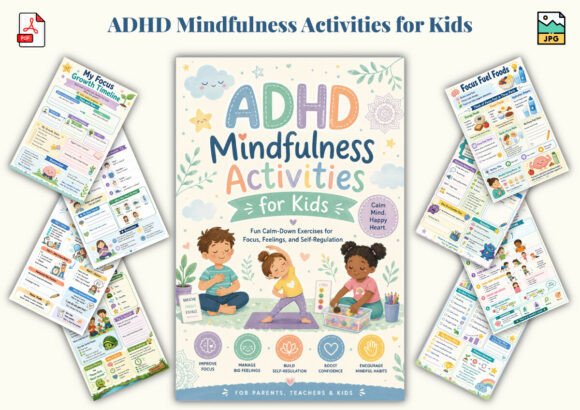
For children with ADHD, staying focused and managing emotions can be a daily challenge. However, incorporating mindfulness into their routine can offer powerful tools to support attention, self-regulation, and emotional awareness. ADHD Mindfulness Activities for Kids is a resource designed specifically for this purpose, offering engaging activities that make mindfulness accessible and enjoyable for children. This printable workbook includes 31 unique pages filled with exercises, prompts, and strategies tailored to meet the needs of kids with ADHD.
Understanding the Role of Mindfulness for Children with ADHD
Mindfulness is the practice of being present in the moment without judgment. For children with ADHD, this practice can help improve focus, reduce impulsive behaviors, and enhance emotional regulation. Unlike traditional meditation techniques, which may feel overwhelming or abstract, ADHD Mindfulness Activities for Kids uses interactive and sensory-based approaches to engage young learners.
The workbook includes a variety of activities such as breathing exercises, reflection prompts, and movement-based mindfulness practices. These activities are designed to be short, simple, and adaptable to different learning styles and attention spans. By integrating these exercises into daily routines, parents, teachers, and therapists can help children develop essential skills for managing ADHD symptoms.
Key Features of the ADHD Mindfulness Activities for Kids Workbook
- 31 Unique Activity Pages: Each page offers a new exercise or strategy to explore mindfulness in a fun and engaging way.
- Mindfulness Breathing Exercises: Simple breathing techniques that help children calm down and refocus when overwhelmed.
- Focus-Building Tools: Activities that encourage sustained attention and concentration, such as guided visualization and attention games.
- Emotional Regulation Tools: Worksheets and prompts that help children identify and manage their emotions effectively.
- Calm-Down Strategies: Practical coping skills that children can use during moments of stress or anxiety.
- Interactive Worksheets: Hands-on activities that allow children to reflect on their experiences and progress over time.
- Sensory Awareness Exercises: Activities that engage the senses to help children stay grounded and present.
- Kid-Friendly Layouts: Visually appealing designs with gentle pastel themes that make the workbook inviting and easy to use.
Who Can Benefit from ADHD Mindfulness Activities for Kids?
This workbook is suitable for a wide range of individuals and settings. Parents can use it at home to support their child’s emotional development and self-regulation. Teachers and counselors can incorporate it into classroom routines or therapy sessions to provide students with practical tools for managing ADHD symptoms. Homeschoolers and therapists can also benefit from its structured yet flexible approach to teaching mindfulness.
The activities within the workbook are designed to be versatile, allowing users to customize them based on the child’s age, interests, and specific needs. Whether used as a standalone resource or as part of a larger intervention plan, ADHD Mindfulness Activities for Kids provides valuable support for children with ADHD and those who care for them.
Real-World Applications and Scenarios
Imagine a classroom where a child with ADHD becomes easily distracted during group activities. Instead of relying solely on traditional discipline methods, the teacher introduces a brief mindfulness exercise from the workbook, such as a guided breathing activity or a sensory grounding exercise. This helps the child regain focus and return to the task at hand more calmly.
In another scenario, a parent might use the reflection prompts from the workbook to help their child process emotions after a challenging day. By encouraging the child to write or draw about their feelings, the parent fosters emotional awareness and self-expression in a safe and supportive environment.
Therapists and counselors can also use the workbook to guide sessions focused on building coping skills and self-regulation. The interactive worksheets and problem-solving activities provide opportunities for children to practice mindfulness in a structured and therapeutic setting.
Strengths and Considerations of the Workbook
One of the main strengths of ADHD Mindfulness Activities for Kids is its accessibility. The workbook is available in both PDF and JPG formats, making it easy to print or use digitally. The clean, professional layouts ensure that the content is visually appealing and easy to follow, even for younger children.
Additionally, the workbook’s emphasis on practical, hands-on activities makes it an effective tool for teaching mindfulness in a way that resonates with children. The inclusion of sensory-based exercises and movement activities ensures that the workbook caters to a variety of learning preferences and attention styles.
However, it is important to note that while the workbook is a valuable resource, it should not replace professional guidance or treatment. Parents, teachers, and therapists should consider the child’s individual needs and consult with professionals when necessary. The workbook is best used as a supplement to other interventions and support systems.
Evaluating Suitability for Different Needs
When evaluating whether ADHD Mindfulness Activities for Kids is suitable for a particular child or situation, several factors should be considered. First, the child’s age and developmental stage will influence the effectiveness of the activities. While the workbook is designed for children, some activities may need to be adapted for younger or older age groups.
Second, the child’s interest in mindfulness and willingness to engage with the activities will play a role in how well they benefit from the workbook. Some children may find the exercises challenging or unappealing at first, but with encouragement and consistency, they may begin to see improvements in focus and emotional regulation.
Finally, the availability of time and resources should be taken into account. While the workbook is a convenient and cost-effective resource, it requires regular use and engagement to be most effective. Parents and educators should be prepared to dedicate time to practicing the activities and reinforcing the skills taught in the workbook.
Explore more about ADHD Mindfulness Activities for Kids and discover how this resource can support your child’s growth and development.