Self-Esteem Activities for Kids – Confidence Building Workbook
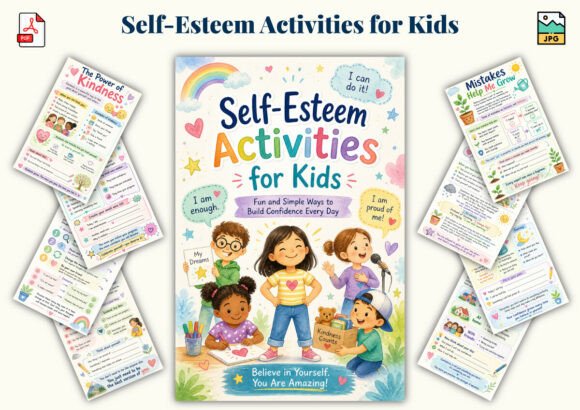
Raising confident, emotionally resilient children is a goal many parents and educators share. But how do you help kids build self-esteem in a way that feels natural and engaging? Self-Esteem Activities for Kids – Confidence Building Workbook offers a practical, interactive solution. This 30-page printable workbook is designed to guide children through meaningful exercises that foster confidence, self-worth, and emotional strength. Whether used at home or in the classroom, it’s a valuable tool for anyone looking to support children in developing a strong sense of self.
The workbook includes a variety of activities tailored to different learning styles and developmental stages. From reflection pages to creative worksheets, each exercise is crafted to be simple, practical, and easy to follow. The goal is to make building self-esteem feel like a fun and rewarding experience for kids.
What’s Inside the Workbook
- Confidence-building activities: These are designed to help children recognize their strengths and celebrate small victories. For example, one activity asks kids to list things they’re proud of, which can be a powerful reminder of their capabilities.
- Positive self-talk exercises: Many kids struggle with negative thoughts, especially during challenging times. These exercises teach them how to reframe those thoughts into more positive affirmations. A common activity involves writing down negative self-talk and then rewriting it in a kinder tone.
- Reflection and journaling pages: These pages encourage kids to think about their feelings, experiences, and goals. Journaling is a great way to process emotions and gain clarity, making it an essential part of the workbook.
- Goal-setting and growth tracking sheets: Setting achievable goals helps kids stay motivated and track their progress over time. This can be especially useful when working on skills like public speaking, sports, or academic subjects.
- Fun worksheets that encourage creativity: Coloring, drawing, and other creative activities are not only enjoyable but also therapeutic. They allow kids to express themselves in ways that words sometimes cannot.
- Real-life confidence strategies for kids: The workbook includes practical advice for handling situations like bullying, peer pressure, or performance anxiety. These strategies are presented in a way that’s easy for kids to understand and apply.
Why Kids Will Love It
One of the best things about this workbook is its approachable language and engaging content. Unlike traditional educational materials, it avoids being overly structured or intimidating. Instead, it uses a friendly, encouraging tone that makes kids feel supported and understood.
The activities are designed to be interactive, allowing kids to participate actively rather than passively absorbing information. This hands-on approach keeps them interested and invested in the process. Plus, the workbook provides opportunities for self-expression, which is crucial for emotional development.
Kids often enjoy the variety of activities included. Some might prefer coloring and drawing, while others may find journaling or goal-setting more appealing. This diversity ensures that every child can find something that resonates with them.
Who Can Benefit from This Workbook?
Parents: This workbook is a fantastic resource for parents who want to support their children’s emotional growth. It can be used as a daily routine or incorporated into special moments like bedtime stories or quiet time. Parents can work through the activities with their kids, creating a bonding experience while reinforcing positive messages.
Teachers: Educators can use the workbook as a supplement to their curriculum. It’s particularly useful for students who may be struggling with self-doubt or social anxiety. Teachers can assign specific activities as homework or use them in group settings to promote teamwork and mutual support.
Homeschoolers: For families who homeschool, this workbook provides a structured yet flexible way to incorporate emotional education into their daily lessons. It can be used alongside academic subjects to create a well-rounded learning experience.
Counselors: Counselors and therapists can integrate the workbook into their sessions with children. The activities provide a safe space for kids to explore their emotions and develop coping strategies. The workbook’s structure also makes it easy to track progress over time.
Real-World Applications
Consider a scenario where a child is preparing for a school presentation. They might feel nervous or unsure of themselves. Using the workbook’s goal-setting sheets, they can break the task into smaller steps and focus on what they’ve already accomplished. Positive self-talk exercises can help them replace anxious thoughts with empowering ones.
In another situation, a child might be dealing with peer pressure or bullying. The real-life confidence strategies in the workbook can help them build resilience and learn how to respond confidently in tough situations. Reflection pages can also give them a safe space to process their feelings and develop healthier coping mechanisms.
For kids who are shy or introverted, the workbook’s creative activities can be especially beneficial. Drawing or coloring can serve as an outlet for emotions and help them express themselves in a non-verbal way. Over time, these activities can help them gain confidence in their abilities and feel more comfortable in social settings.
Things to Consider Before Using the Workbook
While the workbook is designed to be user-friendly, there are a few considerations to keep in mind. First, it’s important to choose activities that match your child’s age and developmental stage. Some exercises may be too advanced for younger children, so it’s a good idea to review the content before starting.
Another consideration is consistency. Like any skill, building self-esteem takes time and practice. Encouraging your child to use the workbook regularly will help reinforce the lessons and make them more effective. However, it’s also important to be flexible and adjust the pace based on your child’s needs and interests.
Finally, while the workbook provides a solid foundation, it’s not a substitute for professional guidance. If your child is struggling with severe self-esteem issues, it’s always a good idea to consult with a counselor or therapist who can provide personalized support.
Self-Esteem Activities for Kids – Confidence Building Workbook is a valuable resource for anyone looking to help children grow into confident, happy, and emotionally strong individuals. With its engaging activities and thoughtful design, it’s a tool that can make a real difference in a child’s life.