Friendship Skills Workbook for Kids
Building strong, healthy friendships is a crucial part of childhood development. It lays the foundation for emotional intelligence, social competence, and lifelong relationships. The Friendship Skills Workbook for Kids offers a structured and engaging way to teach children essential social skills through interactive activities and real-life scenarios. This 31-page printable resource is designed for educators, parents, homeschoolers, and counselors who want to support kids in developing confidence, empathy, and communication skills.
The workbook fits seamlessly into a broader educational or developmental process. Whether used as a standalone activity, integrated into a classroom curriculum, or incorporated into a home learning routine, it provides a consistent framework for teaching and reinforcing friendship skills. Its content-rich pages include lessons on active listening, conflict resolution, sharing, teamwork, and more—each tailored to be accessible and meaningful for children.
What’s Inside the Friendship Skills Workbook for Kids
The Friendship Skills Workbook for Kids includes a variety of tools that make learning about social skills both fun and effective. Here’s what you’ll find inside:
- 31 unique, content-rich pages that cover a wide range of topics related to building and maintaining friendships.
- Fun and easy-to-understand friendship lessons that are presented in a child-friendly format.
- Interactive worksheets and reflection activities that encourage kids to think critically about their interactions with others.
- Real-life scenarios that help children practice decision-making in social situations.
- Step-by-step guides for communication and problem-solving, making it easier for kids to apply what they learn.
- Encouraging prompts that build confidence and kindness in young learners.
This comprehensive approach ensures that children not only understand the concepts behind healthy friendships but also have the opportunity to practice them in a safe and supportive environment.
Skills Kids Will Learn
The Friendship Skills Workbook for Kids is designed to help children develop a wide range of social skills that are essential for success in school, at home, and in the community. Some of the key skills covered include:
- Kind communication and active listening – Teaching children how to express themselves clearly and listen attentively to others.
- Sharing, teamwork, and inclusion – Encouraging cooperation and respect for differences among peers.
- Understanding feelings and emotions – Helping kids recognize and manage their own emotions and those of others.
- Solving conflicts calmly – Providing strategies for resolving disagreements without resorting to aggression or withdrawal.
- Giving compliments and showing respect – Building positive interactions through thoughtful words and actions.
- Building empathy and positive connections – Fostering an understanding of others’ perspectives and needs.
These skills are not only important for forming and maintaining friendships but also for developing emotional intelligence, which has long-term benefits for personal and professional growth.
Design Features That Support Learning
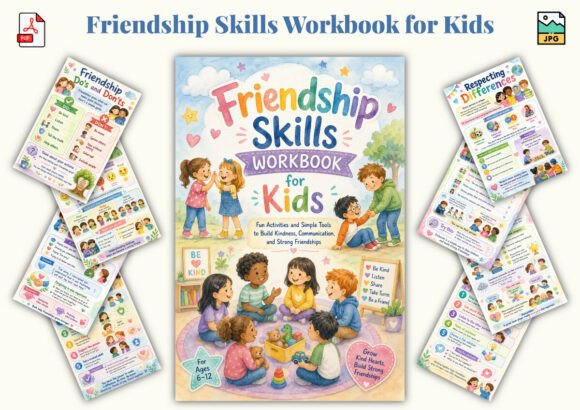
The design of the Friendship Skills Workbook for Kids plays a significant role in its effectiveness. With a soft pastel, child-friendly layout, it creates a welcoming atmosphere that encourages engagement. The clean and minimal page design makes it easy for children to focus on the activities without feeling overwhelmed.
Cute watercolor-style elements add visual appeal and make the workbook feel more like a fun activity book than a traditional textbook. Each page is carefully structured to be different and engaging, ensuring that children remain interested throughout the entire 31-page experience.
The workbook is available in high-quality JPG and PDF formats, making it easy to print and use immediately. The standard page size of 6 × 9 inches ensures that it is convenient for both home and classroom settings.
How to Use the Friendship Skills Workbook for Kids
The Friendship Skills Workbook for Kids can be used in various ways depending on the needs of the child and the goals of the educator or parent. Here are some practical implementation tips and workflow examples:
- Before a project or learning activity: Introduce the workbook as a pre-lesson tool to set the stage for social skill development. For example, before starting a group project, use the workbook to review teamwork and communication strategies.
- During a task or creative process: Incorporate specific worksheets into daily routines. For instance, during a classroom discussion on emotions, use the workbook’s reflection activities to help students process their feelings.
- After a decision or purchase: Reflect on the outcomes of social interactions using the workbook’s scenarios and prompts. This helps reinforce learning and encourages self-assessment.
The workbook can also be used in conjunction with other resources such as books, videos, or role-playing exercises. Its flexibility allows it to complement existing curricula or serve as a standalone tool for teaching social skills.
When integrating the workbook into a routine, consider factors such as preparation, usability, and consistency. Organizing the activities into weekly or monthly themes can help maintain structure and ensure that children continue to build on their skills over time.
Integration Into Broader Educational and Developmental Processes
The Friendship Skills Workbook for Kids is not just a standalone activity—it can be a valuable component of a larger educational or developmental plan. Educators may integrate it into character education programs, while parents can use it as part of a home-based social skills training routine.
For teachers, the workbook can serve as a supplement to existing lesson plans, providing additional material that reinforces key concepts. Counselors and therapists may use it as a tool for guided sessions focused on emotional regulation and interpersonal relationships.
Its compatibility with digital platforms and printable formats makes it easy to adapt to different learning environments. Whether used in a traditional classroom, a homeschool setting, or a remote learning scenario, the workbook remains effective and engaging.
Consistency is key when using the workbook. Regular use over time helps reinforce the skills being taught and builds lasting habits. Parents and educators should consider incorporating the workbook into a regular schedule, such as once a week, to maintain momentum and track progress.
Long-Term Benefits and Quality Control
The Friendship Skills Workbook for Kids is designed with long-term use in mind. Its structured approach ensures that children receive a comprehensive education in social skills, which can have lasting effects on their personal and academic lives.
Quality control is ensured through the workbook’s well-researched content and carefully curated activities. Each page is developed with the goal of promoting positive behavior and emotional intelligence, making it a reliable resource for educators and parents alike.
As children grow, the skills they learn from the workbook become increasingly relevant. Whether navigating school challenges, building relationships with peers, or managing complex emotions, these foundational skills provide a strong base for future success.
Incorporating the Friendship Skills Workbook for Kids into a broader educational or developmental strategy ensures that children receive the support they need to thrive socially and emotionally. Its practical, process-oriented design makes it a valuable tool for anyone looking to help children build strong, healthy, and happy friendships.