Phonics Practice Workbook for Kids
Learning to read is one of the most important milestones in a child's development, and Phonics Practice Workbook for Kids offers a structured, engaging way to make this journey both fun and effective. Designed specifically for preschool and kindergarten learners aged 3–6, this workbook provides a solid foundation in phonics through interactive activities that build confidence and curiosity in young readers.
Whether you're a parent looking for extra support at home, an educator planning classroom activities, or a homeschooling parent seeking quality resources, this workbook delivers clear, step-by-step instruction that aligns with early literacy goals. With its playful design and easy-to-follow format, it turns phonics learning into an enjoyable experience for children while equipping them with essential reading skills they'll use throughout their education.
What Makes This Phonics Workbook Unique?
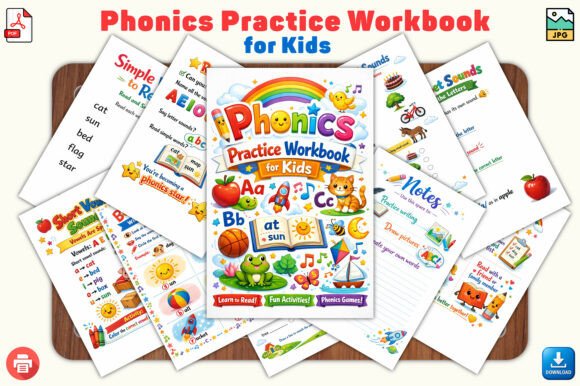
Phonics Practice Workbook for Kids stands out for its comprehensive approach to teaching the fundamentals of reading. It introduces key concepts such as letter sounds, short and long vowels, beginning and ending sounds, and sound blending—all in a way that’s accessible and engaging for young learners.
The workbook includes a variety of activities that reinforce these concepts through repetition and practice. From tracing letters to matching sounds, each exercise is designed to help children internalize phonics rules without feeling overwhelmed. The inclusion of common beginning blends and simple reading words ensures that kids are building a strong vocabulary and decoding skills from the start.
What makes this workbook especially valuable is its balance between structure and creativity. While it follows a logical sequence that builds on previous lessons, it also encourages exploration and discovery. Children aren’t just memorizing facts—they’re learning how to think about language and apply their knowledge in new ways.
Key Features of the Workbook
- Alphabet letter sounds: Introduces the basic sounds associated with each letter, helping children recognize and produce them.
- Short and long vowel practice: Reinforces the difference between short and long vowel sounds through targeted exercises.
- Beginning and ending sounds: Helps children identify and manipulate initial and final consonant sounds in words.
- Sound blending: Teaches how to combine individual sounds to form recognizable words.
- Common beginning blends: Focuses on common consonant blends like "bl," "cl," and "tr" to expand word recognition.
- Simple reading words: Builds fluency by introducing high-frequency words that appear frequently in children’s books.
- Fun phonics activities: Keeps learning enjoyable with puzzles, games, and other hands-on tasks.
- Review pages and notes: Ensures retention with periodic reviews and includes helpful guidance for parents and educators.
Practical Applications Across Different Settings
This phonics workbook is not just a tool for home use—it has wide-ranging applications in various educational and personal contexts. For instance, teachers can incorporate it into their lesson plans as a supplement to existing phonics curricula. Its clear layout and straightforward instructions make it easy to integrate into daily routines, whether used during whole-group instruction or as part of independent practice.
Parents who are homeschooling their children will appreciate the flexibility of the workbook. It can be printed and used as a standalone resource or combined with online phonics programs for a more comprehensive learning experience. The digital-friendly format also allows for screen-based learning, making it ideal for blended or remote learning environments.
For early childhood educators, the workbook serves as a valuable resource for reinforcing phonics concepts in a structured yet playful manner. It can be used during small group sessions, learning centers, or even as homework assignments. The consistent design and progression of skills ensure that children receive a cohesive learning experience regardless of where they encounter the material.
Benefits for Users and Learners
One of the most significant benefits of Phonics Practice Workbook for Kids is its ability to foster independence in young learners. By providing clear instructions and gradually increasing the difficulty of tasks, it empowers children to take ownership of their learning process. This sense of accomplishment helps build confidence and motivation, which are essential for long-term success in reading.
From a usability standpoint, the workbook is designed with young children in mind. The page size (6 × 9 inches) and spacious layout make it easy for small hands to handle and write in. The high-quality PDF and JPG formats ensure that the content remains crisp and legible, whether printed or viewed digitally.
For parents and educators, the workbook offers peace of mind knowing that they are using a resource that is both educational and developmentally appropriate. It eliminates the guesswork of choosing materials that may be too advanced or too simplistic, allowing users to focus on supporting their child’s progress.
Real-World Use Cases and Recommendations
In a classroom setting, teachers might use the workbook as a weekly phonics activity, dedicating time to review specific letter sounds or blends. They could pair it with phonics songs or videos to create a multi-sensory learning experience that reinforces the concepts taught in the workbook.
At home, parents can use the workbook as part of a daily reading routine. For example, they might spend 15–20 minutes each day working through a few pages, using it as a way to bond with their child while promoting literacy. The review pages can be used periodically to check for understanding and identify areas that need more attention.
If you're looking for a supplementary resource for your child’s reading development, Phonics Practice Workbook for Kids is an excellent choice. Its combination of practical exercises, engaging visuals, and clear instructions makes it a valuable addition to any early literacy toolkit.
Consider pairing it with other phonics-based tools, such as flashcards, phonics apps, or storybooks that emphasize phonetic patterns. This multi-faceted approach can enhance learning outcomes and keep children engaged over time.
Overall, Phonics Practice Workbook for Kids is more than just a collection of exercises—it's a thoughtful, well-designed resource that supports the critical first steps in learning to read. Whether used at home, in school, or as part of a larger curriculum, it provides a strong foundation that sets children up for future academic success.